Get Paid To Promote, Get Paid To Popup, Get Paid Display Banner -->
Showing posts with label Car. Show all posts

Tuesday, February 15, 2011

Tata Aria Car Autos Trend Design


Tata Aria Car Autos Trend Design
Tata Motors is finally officially launched the Tata Aria, which is the first Indian car that uses a four-wheel drive. India-based company said Aira is a creation of luxury with a blend of sedan and the prowess of an SUV, all mixed in one car. This car has a navigation system based In-dash GPS which was first class. In addition, the vehicle is equipped with several advanced security features such as Electronic Stability Programme (ESP), which ensures stability of the car, and six airbags to guarantee the safety of passengers when the accident occurred.

Advanced features do not stop there, because there are information systems that continue to show important data about the vehicle, Cruise Control that allows you to set the pace, and automatic climate control. For friends during the trip, available 2-DIN music system and Bluetooth, with phone and music controls mounted on the steering wheel. Aria uses the 2.2-liter Common Rail Direct Injection, with variable turbine technology and the ECU 32-bit, so that could give power of 140 PS and 320 Nm of torque. The machine was then mated with a gearbox Mark II, thus ensuring a smooth power delivery and precise.

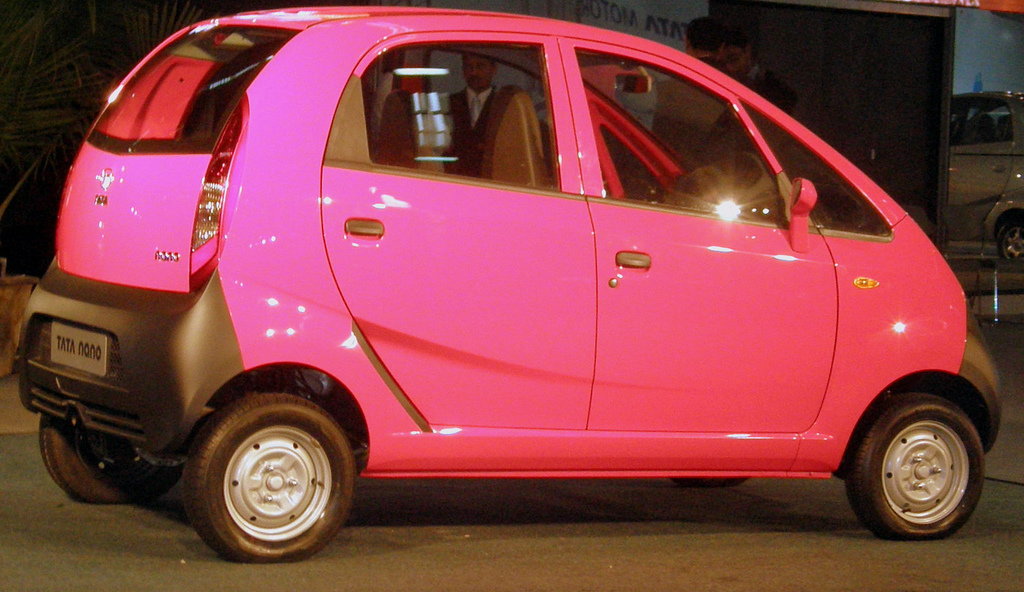
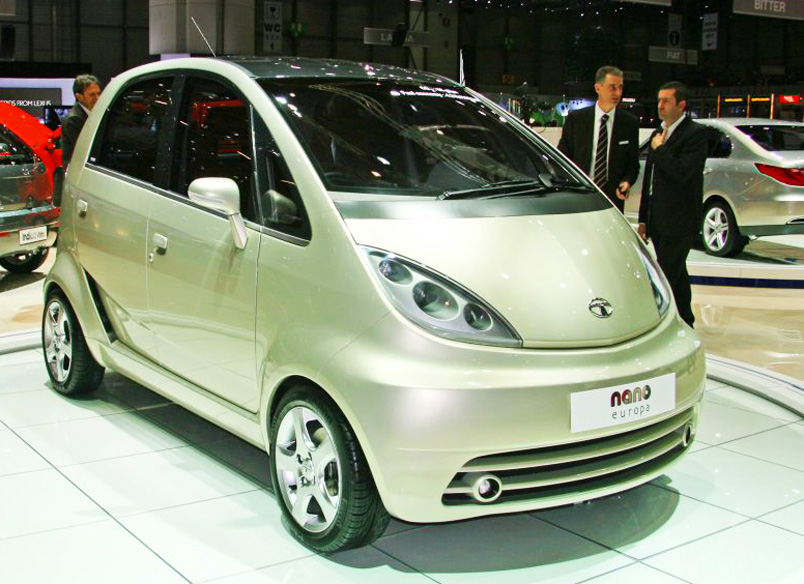
Tata Nano Car Autos Trend


Tata Nano Car Autos Trend
The car is dubbed the people's car with mass production of the world's cheapest, Tata Nano, at the end of 2011, will surprise with creating a diesel-fueled vehicles and the most efficient in the world. The car manufacturer of India and the Group of Tata Motors was rumored to make the Nano is not just as a tiny and most affordable car ever made, but also the most efficient fuel for today,

Before the news blew in 2011 about the latest technology, the Nano, the car is initially at preach using 2-cylinder turbocharged engine with 600 or 700 cc displacement, with an output of between 20 to 30 percent higher than one unit of the same. "The diesel engine will be in the range of 600-700 cc, such as petrol versions and can be higher priced slightly above the current variant." According to an article published by Times of India in mid January.

Manufacturer Tata Motors
Also called one-lakh car
Production 2008�present
Assembly Pantnagar, Uttarkhand, India
Charodi, Gujarat, India (since June 2010)
Class City car
Body style(s) 4-door
Layout RR layout
Engine(s) 2 cylinder SOHC petrol Bosch multi-point fuel injection (single injector) all aluminium 624 cc (38 cu in)
Transmission(s) 4 speed synchromesh with overdrive in 4th
Wheelbase 2,230 mm (87.8 in)
Length 3,099 mm (122.0 in)
Width 1,495 mm (58.9 in)
Height 1,652 mm (65.0 in)
Kerb weight 600 kg (1,300 lb)�635 kg (1,400 lb)
Designer Girish Wagh, Justin Norek of Trilix, Pierre Castinel

Monday, December 27, 2010

New Car Hyundai Verna Hatchback Concept


Hyundai Verna hatchback 5-door took part in the Guangzhou International Automobile Exhibition 2010. Before Hyundai Verna hatcback appears, Hyundai Verna Hyundai first introduced the 4-door sedan at the Beijing Automotive Exhibition 2010.

After the Nissan Sunny which presents the latest, now turn Hyundai Verna reportedly present at the mat Guangzhou Auto Show 2010. But this latest Verna does not appear as a sedan, but comes as a hatchback. The plan, Verna hatchback will be manufactured locally in China, and will use different names.

Cars manufactured by Hyundai with a joint venture between Beijing Automotive Industry Holding Company will use two different engine options. The first engine is gasoline with a capacity of 1400 cc that could provide power 105 horsepower and 135 Nm of torque.

While a larger capacity engine, 1600 cc engine will generate power of 121 hp and maximum torque of 155 Nm. In the Chinese market, entry-level model with a capacity of 1400 cc will be able to achieve fuel consumption figures of 6.2 liters for a distance of 100 km. So that became a teririt in its class.

Suzuki New SX4 Car Diesel Design


Speculation about the existence of a diesel-engined SX4 is fulfilled. Maruti Suzuki in India ready to launch a diesel car that early next year. Maruti Suzuki SX4 diesel announced it will begin production in January 2011. Then the next car will go on sale to the public.

SX4 diesel will be equipped with the same 1300 cc engine with the Fiat Linea and Punto. Diesel engines will also adopt the technology is applied to the Swift DDiS. But Suzuki claim there are a number of new technologies that dicangkokan the SX4 diesel engine. Among variable geometry turbo that can produce power and torque is greater.

Design: The SX4 was designed by Giorgetto Giugiaro's Italdesign studio. The Suzuki SX4 was initially introduced as a five-door hatchback which was marketed as a crossover. The sedan was unveiled at the 2007 New York Auto Show and was later on launched in Japan, India and a few East european countries. The "SX 4" term was used by American Motors (AMC) for a sporty liftback model.

Engine: After using the Fiat 1.3l multijet engine for its Swift and Swift Dzire, Maruti will continue to use the DDiS engines. In the European market, the SX4 is sold with 1.9-litre and 2.0-litre DDis engine options. We expect, Maruti to launch the SX4 diesel with a 1.6-litre DDis, and this should be Maruti's reply to the VW Vento diesel, which produces 105-bhp from a 1.6-litre oilburner.

Features: The SX4 diesel is the twin of its petrol variant. There is no difference between the two except for their hearts.

Competitors/Overall Evaulation: The main rivals of the SX4 will be its own petrol sibling, the Honda City, Fiat Linea, Ford Fiesta Hyundai Verna and the recently launched Volkswagen Vento. The SX4 has a huge plus with the Maruti brand having the largest after sales and service network and good ownership experience.

Tuesday, December 14, 2010

Mobil Balap Listrik dan Modifikator Nasional

Mobil Aballs menjadi pemenang dalam kontes modifikasi, Autoblackthrough 2010. Dapur pacu mobil ini dikembangkan oleh LIPI, sementara seluruh tubuh Aballs dibuat secara custom oleh rumah modifikasi Signal.

Wednesday, December 8, 2010

Iran unveils mass production lines of tactical vehicle, mortar system

Iran unveiled mass production lines of 3.4 tone tactical vehicle dubbed "Kaviran" and 120mm mortar system of "Razm" as the country is marking the 4th day of its Holy Defense Week on Saturday.

"Kaviran can be used in uneven paths and it increases operational power of armed forces in ground battles," Iranian Defense Minister, Brigadier General Ahmad Vahidi said in the unveiling ceremony of the defense projects.


The vehicle can pass across river with 70 centimeter depth and is able to work as troop carrier, ambulance, 107mm rocket-launcher and 120mm mortar carrier, he added.

Vahidi continued, "120mm mortar which is of long-range class has already been produced with the range of 6200 meter, but the range is increased to 16 kilometers (the range is doubled) with efforts of Iranian Defense Ministry experts."

The system is very powerful and agile and can be placed on Kaviran tactical vehicle, he noted.

Monday, December 6, 2010

Iran's IKCO Plans for a Low-cost Car

Javad Najmeddin, IKCO CEO in this regard said, "In order to gain more domestic and international market share and meet customers' demands, IKCO is going to design and present eight new products within the next five years.

Najmeddin then pointed out that two of these eight new cars would be designed and manufactured on totally new platforms, one of which would belong to A or B segment and would cost 8000 to 10000 dollars.

"The Design and production of an eight thousand dollar passenger car that meets all modern standards is a difficult and complicated process," IKCO CEO said and added, "when we talk of a low-cost car, we still consider a quality car that observes all required standards."

Paykan was one of IKCO's most popular sedans that was phased out in 2006.

Iran's IKCO Plans for a Low-cost Car

Javad Najmeddin, IKCO CEO in this regard said, "In order to gain more domestic and international market share and meet customers' demands, IKCO is going to design and present eight new products within the next five years.

Najmeddin then pointed out that two of these eight new cars would be designed and manufactured on totally new platforms, one of which would belong to A or B segment and would cost 8000 to 10000 dollars.

"The Design and production of an eight thousand dollar passenger car that meets all modern standards is a difficult and complicated process," IKCO CEO said and added, "when we talk of a low-cost car, we still consider a quality car that observes all required standards."

Paykan was one of IKCO's most popular sedans that was phased out in 2006.

Made in Palestine: Cars Work on Compressed Air

Imagine that your car could run on compressed air instead of gas; that is exactly what Immad Hasuna, a Palestinian mechanic has done.

Hasuna, age 26, owns a small car repair shop in the central West Bank city of Ramallah, descendant from a 1948 refugee family; he is a simple mechanic that did not go to school to learn his trade.

The idea started two years ago, Hassina says, as he was cleaning a truck engine using compressed air, the car moved few meters due the air purser in the engine. This made him think about how an air purser could be used to move the truck faster and for long distance.

Later, Hasuna experimented with his idea by hooking an air compressor in a truck and use the air purser to make the car engine run, the experiment worked and the first engine working on air was born.

The new engine is safe, it does not explode in accidents, and does not heat up, in fact because of the compressed air the engine cools with more distance the car drives, Hasuna explains. In addition this engine will be cheaper to operate.

Regarding the environment, since the engine does not operate with gas there are no ignition fumes and the car does not generate CO2, making Hasuna's engine 100% environmentally friendly.

The Palestinian Authority granted Hasuna a patent on his engine, he won the first prize at the Made In Palestine Contest. In addition, the Palestinian Prime Mister Salam Fayyad donated a government car for Hasuna to do experiments on.

Hasuna says that he is looking for funding to continue working on his engine, he hopes that this engine will be available for consumers soon.

Made in Palestine: Cars Work on Compressed Air

Imagine that your car could run on compressed air instead of gas; that is exactly what Immad Hasuna, a Palestinian mechanic has done.

Hasuna, age 26, owns a small car repair shop in the central West Bank city of Ramallah, descendant from a 1948 refugee family; he is a simple mechanic that did not go to school to learn his trade.

The idea started two years ago, Hassina says, as he was cleaning a truck engine using compressed air, the car moved few meters due the air purser in the engine. This made him think about how an air purser could be used to move the truck faster and for long distance.

Later, Hasuna experimented with his idea by hooking an air compressor in a truck and use the air purser to make the car engine run, the experiment worked and the first engine working on air was born.

The new engine is safe, it does not explode in accidents, and does not heat up, in fact because of the compressed air the engine cools with more distance the car drives, Hasuna explains. In addition this engine will be cheaper to operate.

Regarding the environment, since the engine does not operate with gas there are no ignition fumes and the car does not generate CO2, making Hasuna's engine 100% environmentally friendly.

The Palestinian Authority granted Hasuna a patent on his engine, he won the first prize at the Made In Palestine Contest. In addition, the Palestinian Prime Mister Salam Fayyad donated a government car for Hasuna to do experiments on.

Hasuna says that he is looking for funding to continue working on his engine, he hopes that this engine will be available for consumers soon.

The first fully made in Palestine car unveiled

'Mary Seeds' is the first electric car of Palestinian unveiled in its final form in the contest and exhibition Made in Palestine, 2010, which runs from 23-25 November 2010 in Ramallah in the West Bank.

Actually this is the third electric car made in Palestine, but will be the first made in Ramallah. Palestinian scientist in Gaza has developed the first Palestinian electric car in Gaza. see here. and also in Hebron

Gaza also developing the first racing car on their own ability. See here.

The first fully made in Palestine car unveiled

'Mary Seeds' is the first electric car of Palestinian unveiled in its final form in the contest and exhibition Made in Palestine, 2010, which runs from 23-25 November 2010 in Ramallah in the West Bank.

Actually this is the third electric car made in Palestine, but will be the first made in Ramallah. Palestinian scientist in Gaza has developed the first Palestinian electric car in Gaza. see here. and also in Hebron

Gaza also developing the first racing car on their own ability. See here.

Wednesday, October 27, 2010

Iran hybrid car ranks third in 2010 EHI

A hybrid car designed and made by Iranian students has ranked third in the 2010 Formula Electric and Hybrid Italy (EHI) held in the city of Turin.
Hakhamanesh H.V., made by Iran's Sharif University students, took part in the event's class 2H categories and stood third after mecc-H2 and PicoFarad Racing Team by Italy's Polytechnic University of Milan and Turin respectively.

Iran's four-wheel automobile has a composite body, weights 600 kilograms and can travel up to 90 kilometers an hour, ISNA reported.

The vehicle's eight batteries can be charged by urban electricity; it is almost noiseless and does not pollute.

EHI is an international competitive and sports event found by the Assiciazione Tecnica Dell'Automobile in 2005 in an effort to promote innovative activities in academic institutions across the world, which can improve the energy efficiency of vehicles supplied by different energy sources.

International teams from universities and technical institutions take part with vehicles completely designed and made by them. Their products are tested for endurance, acceleration, energy consumption, autocross and climbing abilities.

The teams are then evaluated and awarded by the Technical Committee, based on the characteristics and performance of their vehicles, their level of innovation and industrial potentials.

The 2010 edition of the Formula Electric and Hybrid Italy (EHI) was held from October 7 to 10.

Iran hybrid car ranks third in 2010 EHI

A hybrid car designed and made by Iranian students has ranked third in the 2010 Formula Electric and Hybrid Italy (EHI) held in the city of Turin.

Hakhamanesh H.V., made by Iran's Sharif University students, took part in the event's class 2H categories and stood third after mecc-H2 and PicoFarad Racing Team by Italy's Polytechnic University of Milan and Turin respectively.

Iran's four-wheel automobile has a composite body, weights 600 kilograms and can travel up to 90 kilometers an hour, ISNA reported.

The vehicle's eight batteries can be charged by urban electricity; it is almost noiseless and does not pollute.

EHI is an international competitive and sports event found by the Assiciazione Tecnica Dell'Automobile in 2005 in an effort to promote innovative activities in academic institutions across the world, which can improve the energy efficiency of vehicles supplied by different energy sources.

International teams from universities and technical institutions take part with vehicles completely designed and made by them. Their products are tested for endurance, acceleration, energy consumption, autocross and climbing abilities.

The teams are then evaluated and awarded by the Technical Committee, based on the characteristics and performance of their vehicles, their level of innovation and industrial potentials.

The 2010 edition of the Formula Electric and Hybrid Italy (EHI) was held from October 7 to 10.

Wednesday, June 16, 2010

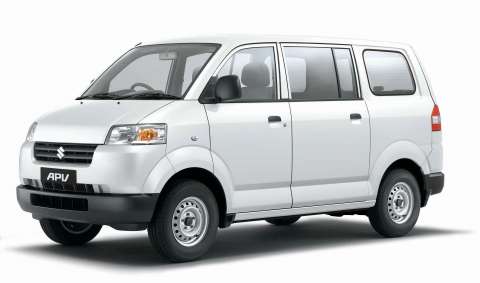
Suzuki APV Car Top Engine Series


Suzuki APV Car Top Engine Series
Suzuki APV (All Purpose Vehicle) is Suzuki's budget MPV designed in Japan and assembled in Indonesia by PT. Indomobil Suzuki International (a subsidiary of Suzuki).

At November 2007, Suzuki released the improved APV named APV Arena (APV Type II in some countries). It offers more luxurious features with the Luxury/SGX type as the flagships (captain seat version). Not just doing some facelift in exterior but also the interior is changed as well an improvement in engine performance. The APVs are exported to countries like Australia, Algeria, Aruba, Chile, India, Malaysia, Singapore, Brunei, Pakistan, Thailand and the Philippines.
Suzuki APV in use at an airport.
Manufacturer PT. Indomobil Suzuki Intl.
Production 2004�present
Predecessor Suzuki Carry, Suzuki Every
Class Compact MPV
Body style(s) Semi-bonneted Minivan
Platform Ladder Frame
Engine(s) G15A (1493 cc), G16A (1,590 cc) 16 valve MPi Inline 4, 92 bhp (69 kW) and 127 N�m
Transmission(s) 5-speed manual and 4-speed automatic
Wheelbase 2,625 mm (103.3 in)
Length 4,155 mm (163.6 in)
Width 1,655 mm (65.2 in)
Height 1,840 mm (72.4 in)
Curb weight 1,270 kg (2,800 lb)
Fuel capacity 43 L (9.5 imp gal; 11.4 US gal)
Related Mitsubishi Maven