Get Paid To Promote, Get Paid To Popup, Get Paid Display Banner -->
Showing posts with label Lancia. Show all posts

Wednesday, January 19, 2011

Lancia Stratos Sport Cars Concept

Lancia Stratos Sport Cars Concept
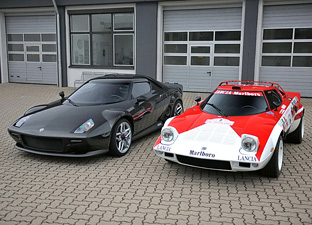
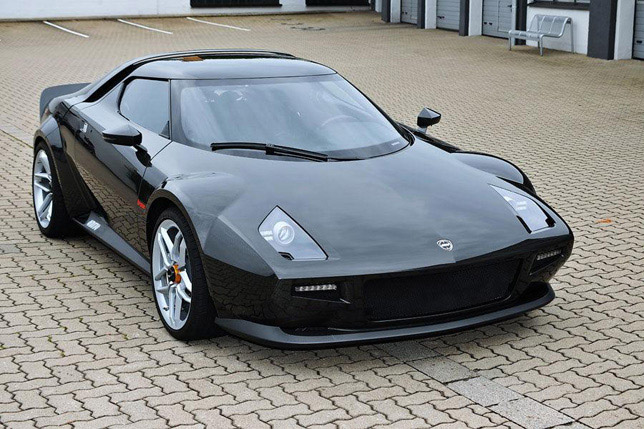
In November 2010, forty years after the Stratos� presentation at the Turin Motor Show, the New Stratos was publicly presented for the first time at the Paul Ricard Circuit � the legend returns. The legendary Lancia Stratos HF was without a doubt the most spectacular and successful rally car of the 70s. With its thrilling lines and uncompromising design tailored to rally use, the Lancia Stratos not only single-handedly rewrote the history of rallying, it won a permanent place in the hearts of its countless fans with its dramatic performance on the world's asphalt and gravel tracks - a performance which included three successive world championship titles.
The latest  Lancia Stratos Sport Cars Concept not but single-handed rewrote the account of baiting, it advanced a perm place in the affections of its innumerous fans on its dramatic production on the world�s mineral pitch and gravel tracks � a execution which admitted 3 sequential world backup titles. The centrepiece of the fresh 2010 Lancia Stratos are the 4.3L, light alloy V8 locomotive of the Ferrari F430 Scuderia, which speeds the high tech sports car to a accelerate of 200 kilometres per hour in 9.7 seconds.
Lancia Stratos Sport Cars Concept
The goal for the development of the Lancia Stratos HF's successor was to once again create a mid-engine sports car with a short wheelbase, low weight and superior agility. Just as the Lancia Stratos, with its Ferrari Dino V6 engine, was nevertheless a distinct sports car in its own right, the New Lancia Stratos Sport Cars Concept is also a distinct development, using components of the Ferrari 430 Scuderia. Almost all of these components have been modified and, as necessary, customized to their new purpose. However, it should also be emphasized that the Ferrari Scuderia already sets the standard amongst the current super sports cars and, as such, provides an excellent basis for further development.
The high execution locomotive which absorbs its intake air by the roof spoiler�s face openings, back-number equipped on afresh control social unit and a high-performance exhaust by Capristo, including multiplex and sports car exhaust; it delivers 540 horsepower and provides a torque of across 500 Land of Enchantment.
Lancia Stratos Sport Cars Concept
The aluminum chassis was shortened by 20cm and welded to a roll cage made of 40mm-thick FIA FE45 steel. This method significantly increases rigidity, and this, combined with the shifting of the center of gravity towards the front, provides the basis for the vehicle�s extraordinary handling characteristics. Both the body � which is 33cm shorter than the Scuderia�s � and the interior are constructed entirely of carbon fiber and aluminum. All of the body components of the shell and interior are made of visible carbon. This places especially high demands on the quality of the processing, which was accomplished by Re Fraschini.
Since the first blurry pictures of New Lancia Stratos Sport Cars Concept appeared on the Internet in the summer of 2010, sports car enthusiasts and motorsport fans from around the world have been waiting impatiently for confirmation of whether the successor to the legendary Lancia Stratos really drives as impressively fast and with as much agility as appearances would suggest.
Lancia Stratos Sport Cars Concept
Finally, the steering has been converted to electro-hydraulic, the new smaller carbon steering wheel displays the exact shift points via differently colored LEDs and the paddle shifters are from the Ferrari 430 racecar. The New Lancia Stratos Sport Cars Concept, like the racing version of its predecessor, has been extensively geared � down to every last detail � towards lightweight design and performance. Not surprisingly, the specification sheet was therefore extremely ambitious in this regard as well.
Lancia Stratos Sport Cars Concept

Tuesday, September 14, 2010

lancia stratos

lancia-stratos
Lancia Stratos

lancia-stratos
Lancia Stratos

lancia-stratos
Lancia Stratos
lancia-stratos
Lancia Stratos

Lancia Stratos


Lancia Stratos

Lancia Stratos, they were supposed to built 500 to conclude with race regulations but there are actually between 430 and 480 pieces built. The first 50 cars didn't have spoilers on the roof and the back of the car, Lancia added it later because the car was unstable at high speeds. The first 50 cars also had an air intake for the "climate control" at the left front wheel.

The Stratos really brought the spirit back into lancia for a while, and it still has the world record of most rally titles in the world. It was one of the last rally cars without 4 wheel drive.

Although the Lancia Stratos has a really big boot the car isn't very practical for daily use because it can be very hot in the cockpit and you have absoluteky no rear sight, the brakes are very hard and the electrics are a disgrace. There were many Lancia Stratos which burnt out because of electrical failures.

There were also 2 long wheelbased Stratos' made for the use on the circuit and there were also circuit cars with the ordinary wheelbase but they didn't handle as well.

Sunday, July 4, 2010

Lancia fulvia 2010 Wallpapers and Specs

Lancia fulvia
Lancia fulvia

Lancia fulvia
Lancia fulvia

Lancia fulvia
Lancia fulvia

Lancia fulvia
Lancia fulvia

Lancia Fulvia 1967 - 2010 Performance

The Lancia Fulvia is an Italian car introduced at the Geneva Motor Show in 1963 by Lancia. It was produced by that company, and later by FIAT, through 1976. Fulvias are notable for their role in automobile racing history, including winning the International Rally Championship in 1972. On testing it in 1967, Road & Track summed up the Fulvia as "a precision motorcar, an engineering tour de force".

Chassis

The Fulvia was designed by Antonio Fessia to replace the Lancia Appia, with which it shared some components. The Appia was a rear wheel drive car, however, while the Fulvia moved to front wheel drive like the Flavia; the general engineering design of the Fulvia was identical to that of the Flavia with the major exception of the engine, the Flavia having a four cylinder horizontally opposed engine and the Fulvia a 'Narrow Angle' vee configuration as featured on Lancias from the Lambda. The Fulvia used a longitudinal engine mounted in front of its transaxle. An independent suspension in front used wishbones and a single leaf spring, while a solid axle with a panhard rod and more leaf springs was used in back. Four wheel Dunlop disc brakes were a welcome novelty, though Road & Track still noted some significant brake fade.

Engine

One element that was new was the narrow-angle V4 engine. Designed by Zaccone Mina, it used a narrow angle (12�53'28") and was mounted well forward at a 45� angle. The engine is a DOHC design with a one camshaft operating all intake valves and another operating all exhaust valves. It is unique in that though a vee configuration, the very narrow angle of the cylinders allowed for use of a single cylinder head.


Lancia Fulvia Coupe


Displacement began at just 1091 cc with 59 hp (44 kW) with a 72 mm bore and 67 mm stroke. A higher (9.0:1) compression ratio raised power to 71 hp (53 kW) soon after.

The engine was bored to 6 mm to enlarge displacement to 1216 cc for the HF model. This, and some tuning, raised output to 80 to 88 hp (60 to 66 kW).

The engine was reengineered with a slightly narrower bank angle (12�45'28") and longer (69.7 mm) stroke for 1967. Three displacements were produced: 1199 cc (74 mm bore), 1231 cc (75 mm bore), and 1298 cc (77 mm bore). The latter engine is most common, with the former only sold in Greece. The American-spec 1.3 L produced 87 hp (65 kW) and was described as "highly tuned" by Road & Track at the time.

The engine was redone again for a new HF with an even-narrower angle (11�20' now) and longer 75 mm stroke for its final incarnation. A bore of 82 mm gave it a displacement of 1584 cc, and power shot up to 114 to 132 hp (85 to 98 kW) depending on tune.

Body styles

The Fulvia was available with a number of bodies:

Berlina - A compact four-door introduced in 1963.
Berlina 2C - An updated Berlina for 1963 with 71 HP engine.
Berlina GT - An updated Berlina for 1967 with the 1216 cc or 1231 cc engine.
Berlina GTE - Another Berlina update for 1968 with the 1298 cc engine.
Berlina '69 - Another Berlina update for 1969 with the 1298 cc engine and different body.
Berlina '5m - Last Berlina update for 1970 with the 1298 cc engine and 5 speed gearbox.
Coupe - A compact two-door introduced in 1965, the coupe uses a 150 mm shorter wheelbase along with the larger (1216 cc) or 1231 cc engine.
Coupe HF - A rally car version of the coupe introduced later in 1965
Rallye 1.3 HF - An updated HF with the new 1298 cc engine with 101 HP.
Rallye 1.3 - An updated coupe with the new 1298 cc engine with 87 HP.
Rallye 1.3s - An updated Rallye 1,3 with the 1298 cc engine producing 93,2 HP.
Rallye 1.6 HF - The evoution of Rallye 1,3 HF with a 1584 cc engine producing 115 HP.
Rallye 1.6 HF Variante 1016 - The most-powerful Fulvia with a 1584 cc engine producing 132 HP.
Coupe 1,3s - Face-lifted body and new 5 speed gearbox with 1298 cc producing 90 HP.
Coupe 1600 HF - Face-lifted body with 1584 cc engine producing 114 HP.
Coupe 1,3s Montecarlo - Replica of 1972 Montecarlo Rally works car livery with 1298 cc producing 90 HP.
Sport - a 2-seat Zagato rebody of Coupe with aluminium panels and 1216 cc engine.
Sport 1,3 - An updated Sport with 1298 cc producing 87 HP, first 700 cars still have aluminium body.
Sport 1,3s - An updated Sport 1,3 with 1298 cc producing 93,2 HP.
Sport 1,3s 2nd series - An updated Sport 1,3 with 5 speed gearbox.
Sport 1600 - An updated Sport with 1584 cc engine producing 114 HP.


Specs

Sunday, March 28, 2010

2010 Lancia Delta Wallpapers and Specifications

2010 Lancia Delta
2010 Lancia Delta

2010 Lancia Delta
2010 Lancia Delta

2010 Lancia Delta
2010 Lancia Delta

2010 Lancia Delta
2010 Lancia Delta

2010 Lancia Delta Hardblack brings TurboJet Engine to Geneva Motor Show


The Lancia Delta Hardblack will have it's premiere at Geneva autoshow and is the ideal answer to the "3" fundamental and often opposing demands of the modern customer: it offers the space of a big sedan but the length of a compact; the power of a sports car, but with ecologically friendly emission levels and economic consumption. Lancia Delta Hardblack is the top of the range equipment, but at a realistic price.

The new Lancia Delta Hardblack engine delivers a maximum output of 200 HP (147 kw) at 5000 rpm and maximum torque of 320 Nm (32.6 Kgm) at 2000 rpm. Combined with a 6-speed automatic/sequential transmission, the new 1.8 liter 200 HP Di TurboJet engine provides unmatched excitement and driving pleasure.


Specs

Thursday, May 14, 2009

2009 Lancia Delta 1.8 Di Turbo


2009 Lancia Delta 1.8 Di Turbo

Lancia Delta reflects perfectly the concept of �Anticrisis Luxury� as it fulfils the current requirements of prestige and mobility thanks to the logic of downsizing - i.e. it ensures high quality and performance, reducing cost, size and fuel consumption. Thanks to these winning characteristics, in March this model became the leader of its car range in Italy and is fast growing at European level. In order to improve these results, today Lancia launches a new engine and a new version together with a number of technological changes that make this car the reference product for this car range.

The innovations of the 2009 range

The main innovation is represented by the 200 HP 1.8 Di TurboJet engine, the most powerful one of its range. It is an innovative petrol direct injection engine that confirms Lancia�s preference for sports cars and, at the same time, its commitment to protect the environment by limiting emissions and fuel consumption.

These qualities are achieved by enhancing its brilliance, flexibility and the pleasure of driving which have always made this model stand out. This engine is produced by FPT � Fiat Powertrain Technologies - and is provided with a modern 6 speed automatic transmission. It delivers a maximum power of 200 HP (147 kw) at 5,000 rpm and a maximum torque of 320 Nm (32.6 Kgm) at 1,400 rpm. With such equipment, Lancia Delta can reach a maximum speed of 230 km/h and goes from 0 to 100 km/h in only 7.4 seconds. At the same time, the car stands out for low fuel consumption (7.8 litres per 100 km), reduced CO2 emissions (185 g/km) and a Euro 5 homologation.

The second innovation is the exclusive Executive version: a car addressed to clients who look for top luxury and comfort. The �top range� was designed to fulfil the requirements of business clients and members of the diplomatic and institutional worlds - as the attention invested in designing a comfortable passenger compartment shows. Seats are wrap around and comfortable as they are designed to business class standards. The back seats are comfortable for long trips with plenty of room for the legs. Therefore, Lancia Delta Executive offers a real, modern, in tune with the time alternative to bigger, heavier and more expensive cars. The fact this car was chosen to be the Official Car for the 9th World Summit of the Nobel Peace Prize held from 11th to 13th December 2008 in Paris - of which Lancia was the Main Sponsor - is not a coincidence. A Lancia Delta Executive fleet will also drive the international authorities to the G8 summit that will take place from the 8th to the 10th of July.
Lastly, the third innovation of the Lancia Delta 2009 range is represented by the marketing of some innovative devices aimed at making driving a comfortable and pleasant experience. First of all, there are the electronic suspensions with a variable damping system (Reactive Suspension System), capable of reducing car vibrations and ensuring maximum levels of safety, comfort and driveability. Then there is the brand new Sportronic 6 gear automatic transmission with controls on the steering wheels (currently the device is provided with only a 200 HP 1.8 Di TurboJet engine). The last technological innovation of the Lancia Delta is represented by the semi-automatic parking system called �Magic Parking�.

All these technological innovations - together with the self-adaptive bi-xenon headlights (Adaptive Xenon Light) and the integrated satellite navigator (Instant Nav) � were made thanks to the cooperation between the Brand and Magneti Marelli. We cannot forget that the cooperation between Fiat Group Automobiles, Magneti Marelli and Microsoft has given birth to Blue&Me�, a system complete with Telecom service functions - which Lancia Delta is the first one to offer - together with hands free, music player and navigation functions.

Film stars choose Lancia Delta

Lancia Delta was engaged for the Columbia Sony Pictures �Angels and Demons� new film kolossal. This film, inspired by Dan Brown�s bestseller of the same title, is on the same line of the �The Da Vinci Code� and is also directed by Ron Howard, with Tom Hanks in the role of professor Langdon. Lancia celebrates this important product placement with a Delta Special Series that enhances the double soul of this model: an angel in terms of carbon emission and a devil in terms of performances. The proof is in the two engines available for this version, the 200 HP 1.8 Di TurboJet and the 190 HP 1.9 TwinTurbo, which ensure a better CO2/HP ratio for this range - i.e. maximum power for minimum emissions. The same winning features can be found in the other two models that make up the �Premi�re Collection�: 105 HP Ypsilon 1.3 Multijet and 95 HP Musa 1.3 Multijet.

The Lancia Delta Limited Range, which is characterized by its pastel colours, a white main body and a polished black roof, has elegant interiors with a black leather and �Sport� Alcantara� covering. The rich equipment makes this range even more interesting: from the climate control system to the fog lights, from the CD MP3 radio to the steering wheels in leather with radio controls, from the Blue&Me� system to the alloy wheels.

For the movie launch of �Angel and Demons� scheduled for the 15th May, Lancia has decided to launch an original communication campaign that goes under the slogan �One angel, 200 demons�. Actions, performance and temperament: these three concepts dominate the commercial that, thanks to an agreement with Sony Pictures, exclusively shows some of the film shots of which the new 200 HP Delta 1.8 Di TurboJet is the protagonist. The press campaign is as sensational as the film as it combines one of the most emblematic film shots with a double image of the new Delta which clearly refers to its double soul: angelic on the outside, but with 200 demons inside. Lastly, a banner campaign and a web competition organised with the help of Sony Pictures, whose prize is of course a Lancia Delta, are about to be launched on the Internet.

However, the relationship between Delta and the film industry does not stop with the new �Angels and Demons� movie. The exclusive sedan was launched at international level with a commercial that is a true short film starring Richard Gere in the main role and with a soundtrack composed by the master, Oscar winning Ennio Morricone.

Furthermore, for the 9th World Summit of Nobel Peace Prizes, a film was produced to support Aung San Suu Kyi, winner of the Nobel Peace Prize in 1991 and prisoner of her own country. In Italy, the commercial was supposed to have the voice of Dario Fo as the narrator, a winner of the Nobel Prize for Literature.

Lancia Delta is increasingly the car chosen by stars. Since last year, this model has been the Official Car of the most prestigious film festivals sponsored by Brand: following its launch at the 65th Venice Film Festival, a fleet of Delta cars drove cinema stars to the red carpets in Rome, Milan and Turin.

Technical Specifications of Lancia Delta 200 HP 1.8 Di Turbo Jet E5 (Sportronic):

ENGINE: 200 HP 1.8 Di Turbo Jet E5

N. of cylinders, arrangement: 4, in line, transverse forward

Bore x stroke (mm): 83X80.5

Displacement (cc): 1742

Compression ratio: 9.5-0.5 /+0,.0

CE maximum output power: 147 (200 HP) KW from 5,000 to 5,500 rpm

CE peak torque: 320 Nm from 1,400 to 3,750 rpm

Emission standard: Euro 5

Timing system (control): belt, twin overhead camshaft with double phase transformer.

Fuel feed: turbocharger and petrol direct injection system

TRANSMISSION

Drive: front

Transmission, number of gears: automatic, 6 + 1R

ELECTRICAL SYSTEM

Battery: 60 Ah capacity

STEERING

Box: DualdriveTM electrical power steering

Turning cycle between kerbs(m):

10.6 (17? tyres)

11.2 (18? tyres)

2009 Lancia Delta 1.8 Di Turbo